
Make the best ugali with this easy Kenyan recipe! It is the perfect side dish to serve with stews, vegetables, grilled meat, fish, and so much more.

*This post contains affiliate links. As an Amazon Associate I earn from qualifying purchases, at no extra cost to you.
I always get excited when I get to share recipes from my birth country, Kenya. Ugali is one of the dishes I grew up eating, and I'm so happy to share this recipe with you.
Famous ugali proverb:-
Asiyekula ugali hajui thamani yake - Meaning you can't appreciate something's value until you've actually experienced it.
what is ugali?
Ugali is a firm maize flour porridge made by cooking coarse cornmeal with water. It is a staple food in Kenya and many other African countries, where it is known by different names.
Ugali has a mild, neutral flavour, similar to unflavored popcorn.
It is commonly served with vegetables, soups, meat, and stews. In Kenya, ugali is considered one of the national dishes and is eaten almost daily.
ugali ingredients
- coarse cornmeal (maize flour).
- water

how to make ugali
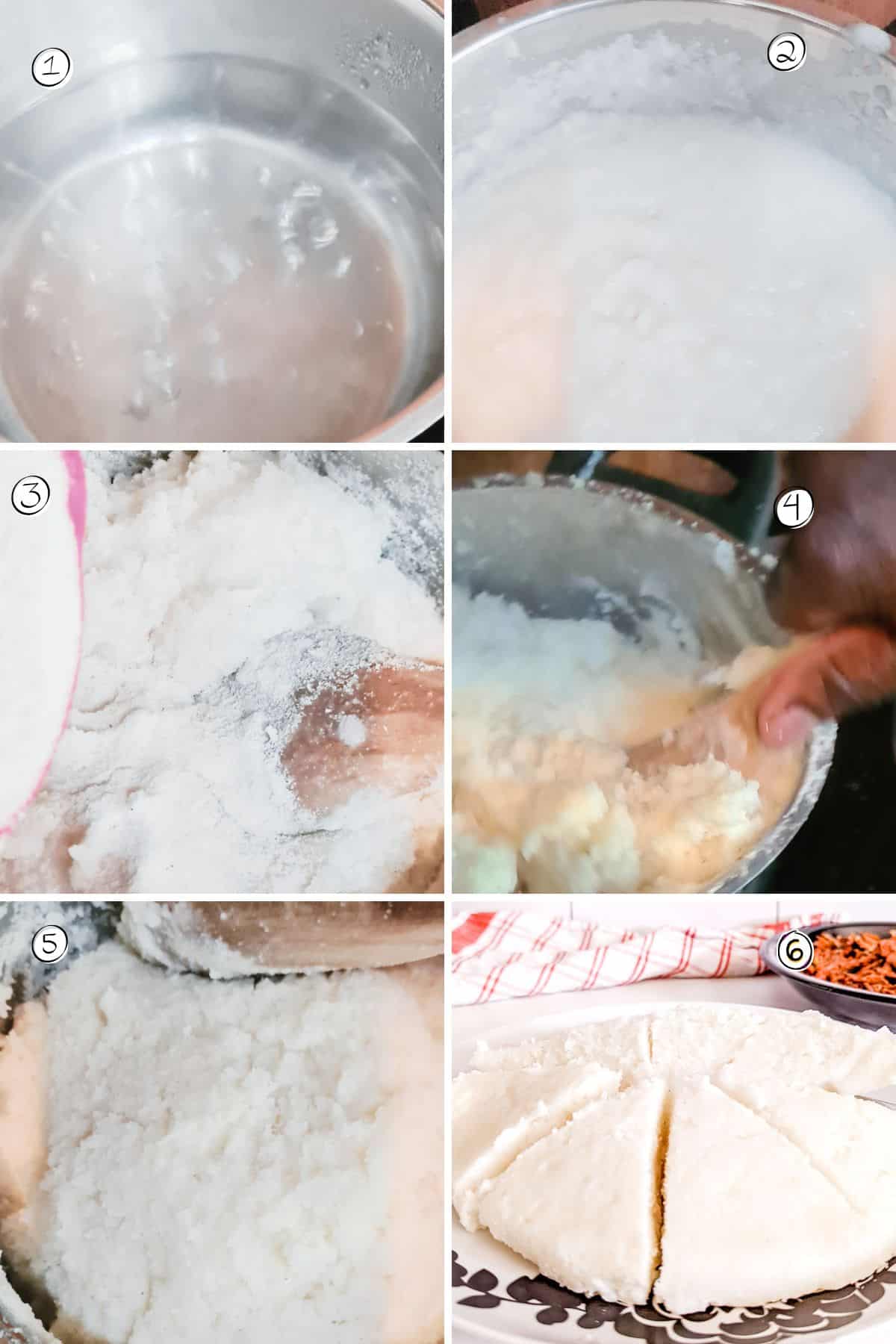
- Step 1: Boil water in a pot.
- Step 2: Add cornmeal, a little at a time and stir using a wooden spoon (mwiko).
- Step 3: Continue stirring, the mixture will form a dough-like consistency as it cooks.
- Step 4: Break any lumps that form by pressing them on the sides of your pot.
- Step 5: Shape the ugali, remove it from the heat, and transfer it to a plate and serve.
Keep leftover ugali in the fridge for 3-5 days or in the freezer for 3-4 months.
how do I know my ugali is cooked?
Remember when making a perfect ugali was considered one of the qualities of being "wife material"?
I couldn't have cared less about this back then but always wondered how my mum could tell when my ugali wasn't fully cooked.
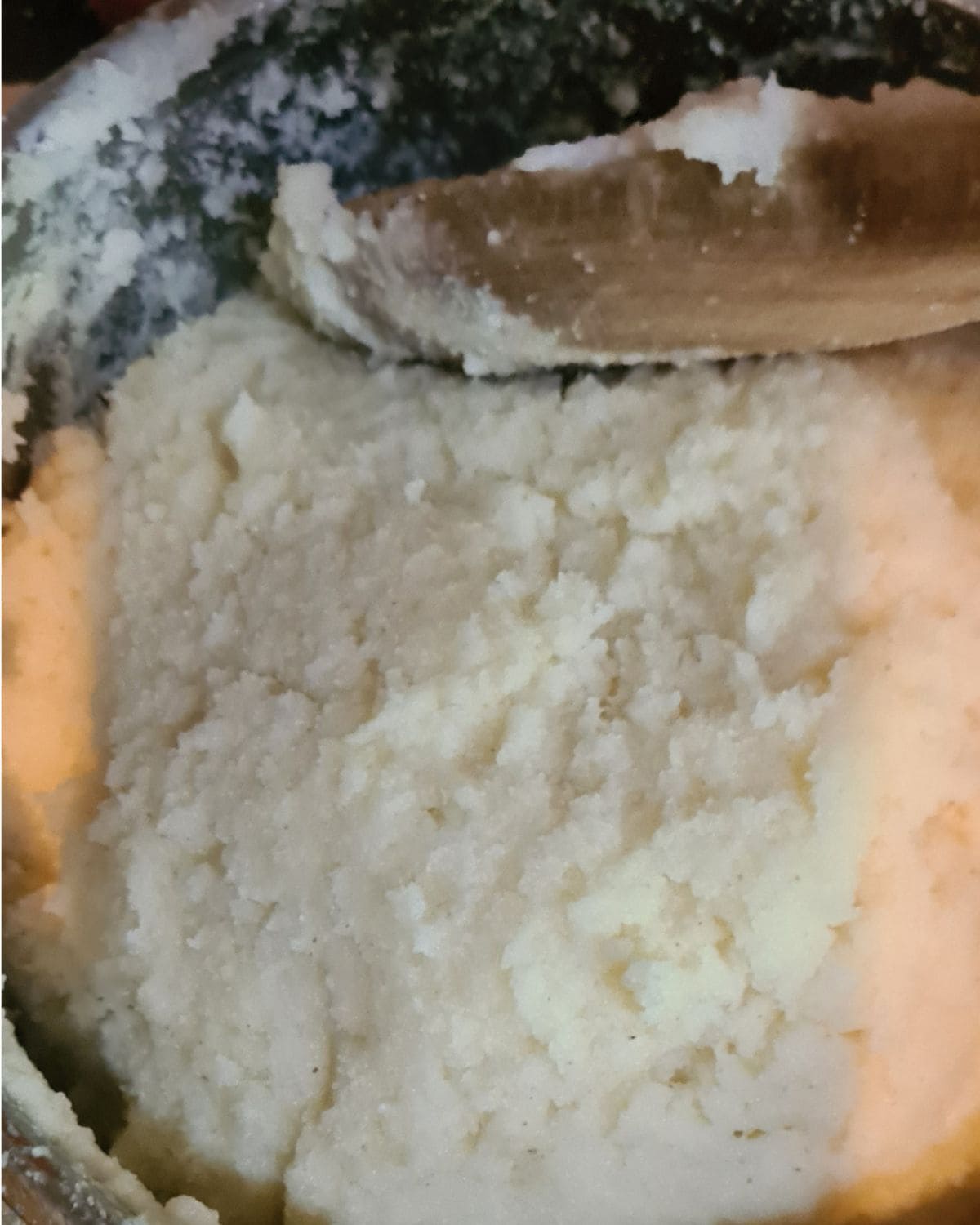
Well, the secret is out! Ugali is ready when:
- It easily pulls away from the bottom and sides of the pot and develops a rich, cooked corn aroma.
- A small piece pinched between your fingers feels smooth and firm, not sticky or grainy.
There's also an unproven theory that properly cooked ugali won't stick when thrown against a wall and will instead fall right off.
what is a mwiko? your ugali's best friend
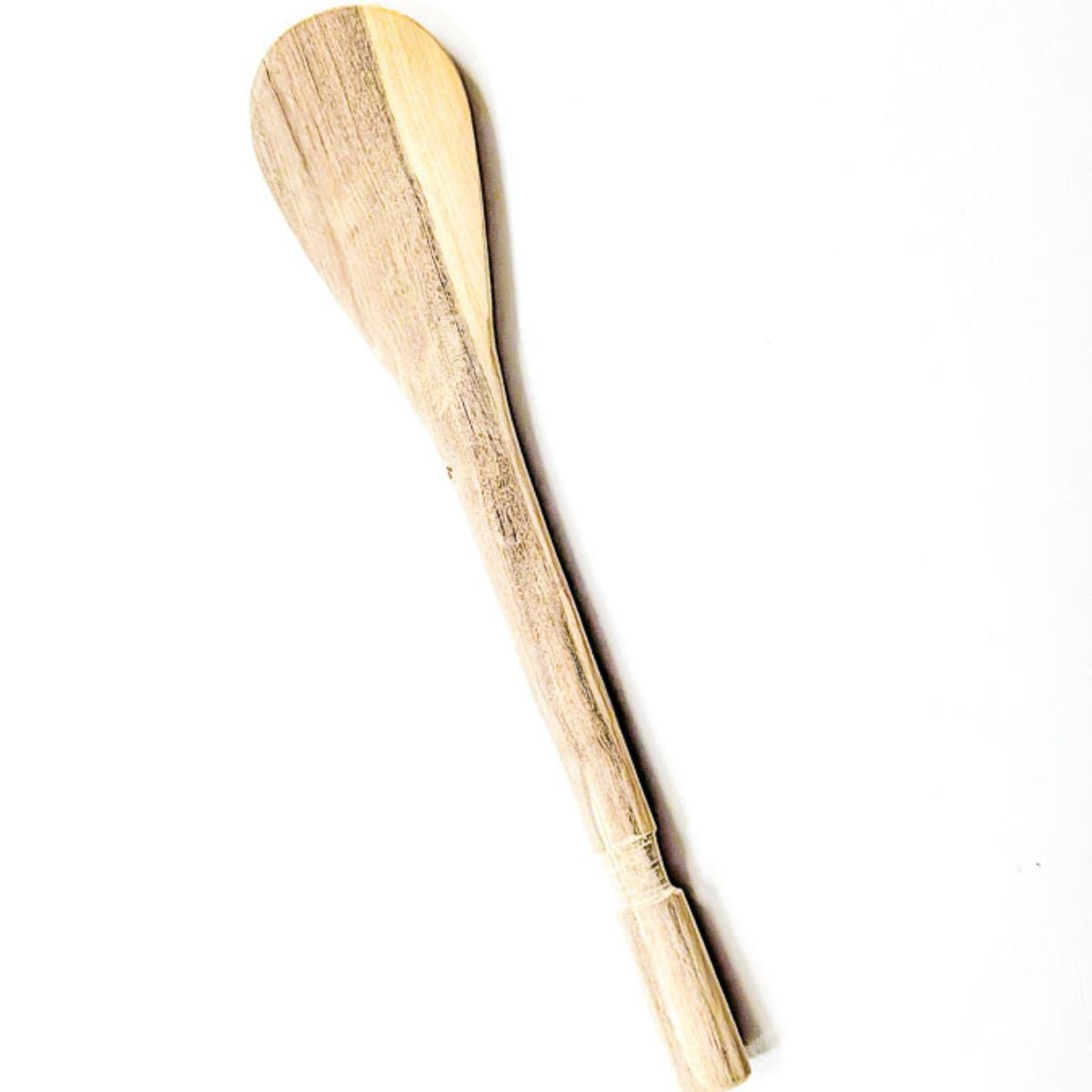
A mwiko is a traditional flat wooden cooking stick used for stirring ugali. Its long handle and sturdy design make it ideal for mixing the thick maize flour without bending or breaking.
It is something that never misses in an African household and is actually a kitchen utensil that has been used in several Swahili proverbs.
Don't worry if you don't have one, you can use a sturdy wooden spoon instead.
can I use polenta?
Traditionally white maize flour is used to make ugali but the color of maize flour doesn't matter so feel free to use the yellow variety or polenta, if that is what you have around.
In Europe and the States, you can easily get it in the African and Asian markets under the name white corn flour, coarsely ground cornmeal, or simply white maize flour.
Ugali can also be made using sorghum, cassava, or millet flour.
what to serve it with
When it comes to serving ugali, any type of savory stews, soups, stir fries, grilled meats, poultry and fish works great.
For a true Kenyan feel, serve ugali with:-
- Nyama Choma
- Kenyan Beef stew
- Kuku Choma
- Sukuma Wiki
- Kachumbari
- Samaki wa Kupaka, or your favorite dishes.
reheating leftover ugali
Cooled ugali will form a thick layer on the surface, especially when it has been out longer than a day. Before reheating, peel this layer so it can heat up properly.
You can reheat leftover ugali in several ways:
- In a pan: Slice the ugali and pan-fry in a little oil over medium heat for 3 to 5 minutes per side, or until heated through.
- In the microwave: Cut into serving-sized pieces and microwave at 600 watts for 2 minutes. Heat for an additional 1 to 2 minutes if needed.
- Recook it: Cut the leftover ugali into small pieces and add them to boiling water. Stir until softened, then add fresh maize flour and cook as directed in the recipe.
frequently asked questions
The two are actually different. Although both are starchy side dishes eaten in most African countries, fufu, which also goes by the name foufou or foofoo, differs from ugali in that it is made from cassava tubers (yuca) or yam.
Ugali, on the other hand, is made by cooking maize flour (cornmeal) in boiling water and stirring until it forms a dense ball.
Fufu is made by blending or pounding peeled starchy tubers (normally cassava (yuca) or yam tubers) into a thick batter, which is then cooked until it reduces to a stretchy form.
Once cooked, fufu is normally shaped into balls and served with stews and soups, such as egusi. Additionally, fufu is less compact or dense than ugali and more stretchy.

more delicious Kenyan recipes to try!
Also don't forget to browse through our collection of African dishes!
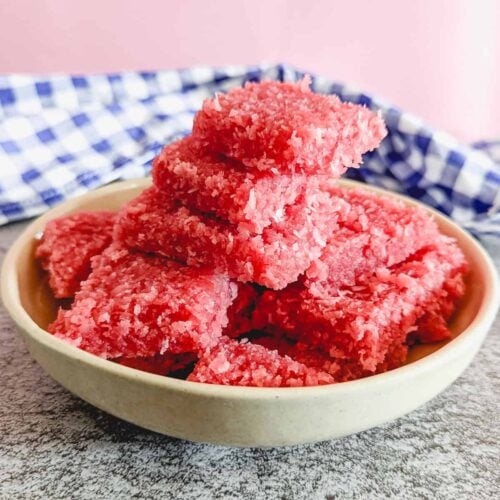

more swallow recipes
Enjoy making this recipe! Be sure to give it a review ⭐ below, or follow me for more tasty recipes on Instagram, Pinterest, Facebook and Tiktok!
Subscribe to our YouTube channel and Newsletter for regular recipe notifications!
Updated on July 28, 2026: This recipe has been updated with simplified instructions for greater clarity and ease of preparation.
📖 Recipe

Ugali Recipe
Video
Equipment
Ingredients
- 2 cups maize flour (coarse cornmeal)
- 4 cups water
Instructions
- Using a medium-sized and deep pot, bring water to boil. Once boiling, reduce the heat to low and set ½ a cup of water aside.4 cups water
- Gradually stir in the maize flour, about ¼ cup at a time, using a wooden spoon. Continue stirring until the mixture thickens to a porridge-like consistency.
- Continue adding the maize flour (cornmeal) a little at a time, and stirring until all of it has been used up and the mixture is firm. This will take about 5 minutes.
- Poke a few holes in the ugali, pour in the reserved hot water, then cover and cook for 5 minutes, stirring halfway through, until the water has evaporated and the bottom is lightly browned.
- Transfer the ugali to one side of the pot. It is ready when it easily pulls away from the bottom, smells of cooked corn, and feels slightly sticky but not grainy.
- Finally, run the wooden spoon under tap water (this helps with shaping), then shape the ugali into a round ball in the pot.
- Invert the pot onto a serving plate to release the ugali. If needed, reshape it with a wooden spoon.
- Serve hot with your favourite dishes.
Notes
- While the authentic recipe uses no butter, margarine, or salt, feel free to add this if you prefer. You can also enrich it by using milk or cream.
- Store leftover ugali in the fridge for 3-5 days. You can also keep it in the freezer for up to 6 months.

Mikayla says
Drizzled with a touch of butter and paired with a bowl of hot chili it was quite delicious.
Kate Hahnel says
That sounds awesome! I would love to try it this way!
Megane says
I'm really enjoying the Ugali recipe! We served it with a rich vegetable stew, and the combination is just perfect. Thanks a lot for sharing this traditional and tasty recipe - it's a wonderful addition to our meals! 🍚🍲👏😋
Jere Cassidy says
Thank you for posting this recipe as I love reading what foods are cooked in other countries. This is similar to my grandmother's cornmeal mush she served for breakfast with eggs.
Sara LaFountain says
Delicious! I have never tried Ugali until now. This recipe was easy to follow and tasted fantastic. Kids loved it too.
Kate Hahnel says
So happy you enjoyed it. It is such an easy meal to put together. Nutritious too.
Jere Cassidy says
This is like the southern cornmeal grits or polenta that makes such a great base for eggs and stews. Glad to read about your recipe of ugali.
Kate Hahnel says
Hello Cassidy, yes it is! My late mother always said it is what the ancestors of the current African-Americans brought with them to America, the only difference being that the American version is much richer. Ugali is also eaten in almost if not all of the African countries, whereby some like in Zimbabwe, cook theirs to a much lighter consistency.
Jazz says
I love the context you provided with this recipe as much as I enjoyed the ugali itself. Will be making this again--thank you!
Kate Hahnel says
Thank you very much, that makes me so happy!
Lilly says
This was my first time making ugali and I enjoyed every moment of it! I paired it with sauteed veggies and it as delicious!
Tamara says
I am so happy I was able to execute this recipe so beautifully! It was pretty simple to make, and truly delicious!
Kaluhi says
Love me some ugaand this guide is perfect !
Jen says
I was very excited when I came across this dish as I love trying African recipes. The ugali was easy to make and very comforting! I’ll definitely be making this again.
Chenée says
Mine came out perfect! Thanks for the tips. I made it with your beef stew recipe and it was the best dinner I've made in a while!
Crystal DaCruz says
My family is from Cape Verde and we utilize cornmeal a lot in our cooking! My family loved this ugali. Thank you for sharing!
Jessica says
I added a little butter to mine and served with vegetables in a sauce and a little salad and it was perfect. I'll definitely be making ugali from now on!
Robin says
I'm a big fan of ugali because it reminds me of grits. Simply delicious.
Kate Hahnel says
Yes! It is amazing how much food unites us. I was just thinking ugali is very similar to the African-American grits. Southern Collard Greens are similar to what we call sukuma wiki in Swahili.
Marta says
I added salt and a little half and half to my pot of ugali and it was a huge hit with my family. We'll definitely be making this often.